One of the most interesting challenges in scenic design isn’t just how a set looks, it’s how it moves. For this multiweek project, Casey Duncan ’26 set out to answer a deceptively simple question: with limited stage space and very few crew members, how can we keep our scenes visually engaging without breaking the flow of the performance?
In live theater, transitions can make or break audience immersion. Long pauses, noisy set changes, or visible scrambling backstage can pull viewers out of the story. At the same time, stage management teams are often small and already stretched thin. The goal was to find a solution that balanced both: smooth, seamless transitions that didn’t overwhelm the crew.
The solution came from an idea rooted in ancient theater: the periaktos. Originating in Greek productions, periaktoi are tall, triangular rotating structures, each side painted with a different scene. By simply rotating them, an entirely new setting can appear almost instantly. It was a perfect concept- but not a perfect fit for this situation. With only two people working on the build and a tight timeline, constructing a traditional rope-and-pulley rotation system wasn’t realistic. So the design was adapted.
Instead of complex rigging, Casey turned to a more accessible solution: wheels. Using materials sourced from a local hardware store, a series of flats were built and supported by six wheels each. This allowed the pieces to rotate and move smoothly across the stage with minimal effort. The result was a simplified, modern take on the periaktos- functional, efficient, and achievable within the project’s constraints. It relied less on intricate mechanics and more on thoughtful design and a bit of physical effort. The design didn’t stop at simple painted flats. Traditionally, periaktoi rely on flat, two-dimensional imagery, but this project aimed to add depth and realism. To do this, the structures were reinforced so they could support built-out elements.
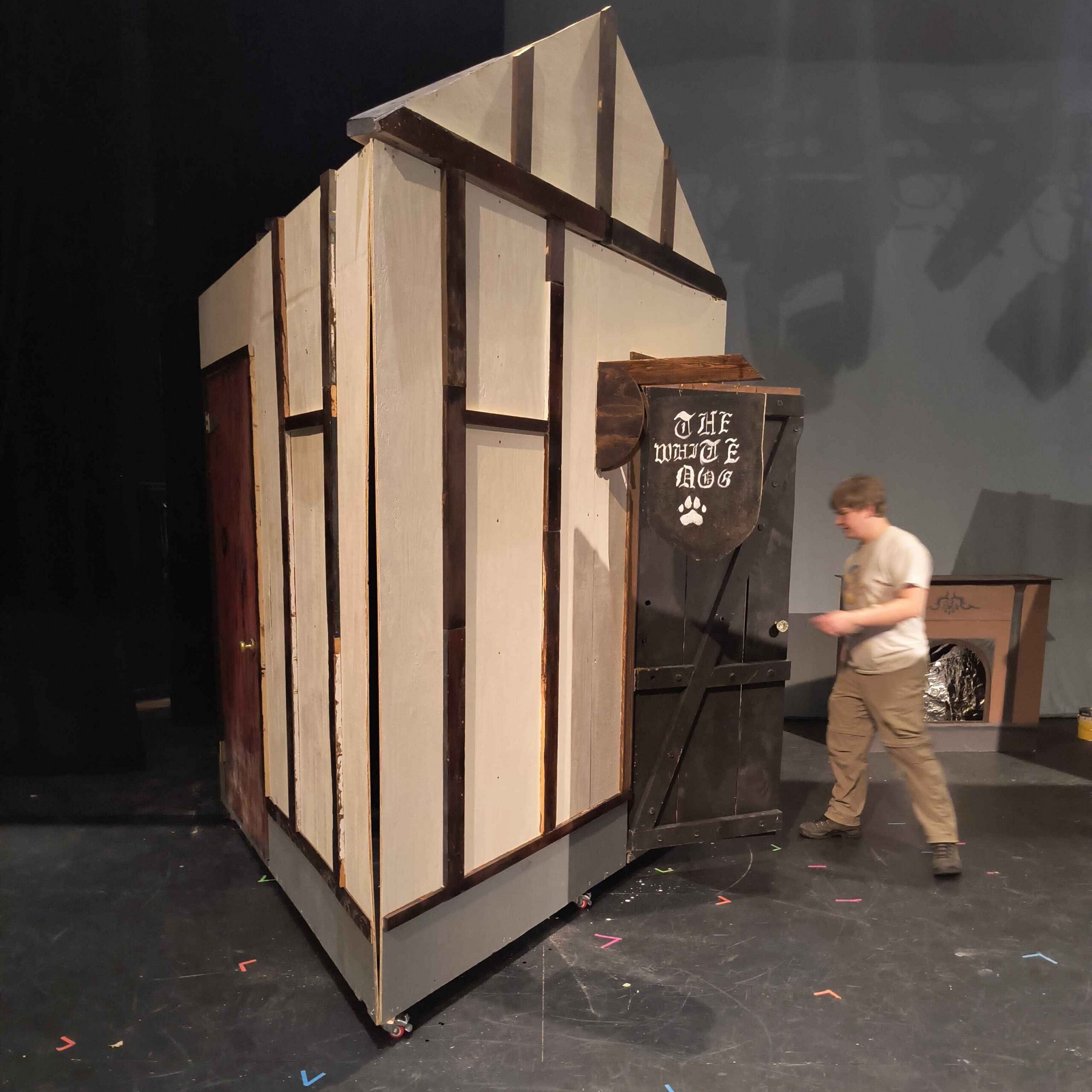
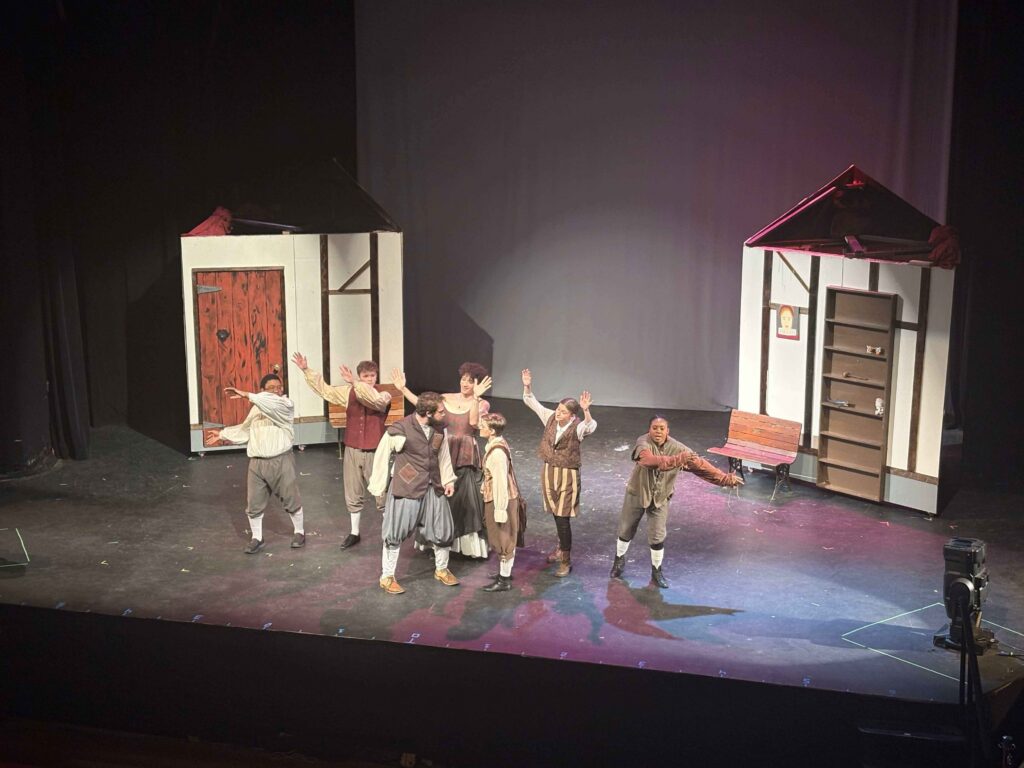
Even with limited time, details like doors, bookshelves, and decorative trim were incorporated. These additions helped create a strong Tudor-style aesthetic, giving the set a richer, more immersive feel. While not every planned embellishment could be completed, the final result still conveyed a clear artistic identity. Despite the constraints of limited time, limited manpower, and limited resources, the project was a success. The rotating set pieces allowed for smooth transitions between scenes, maintaining audience immersion while keeping the workload manageable for the crew.
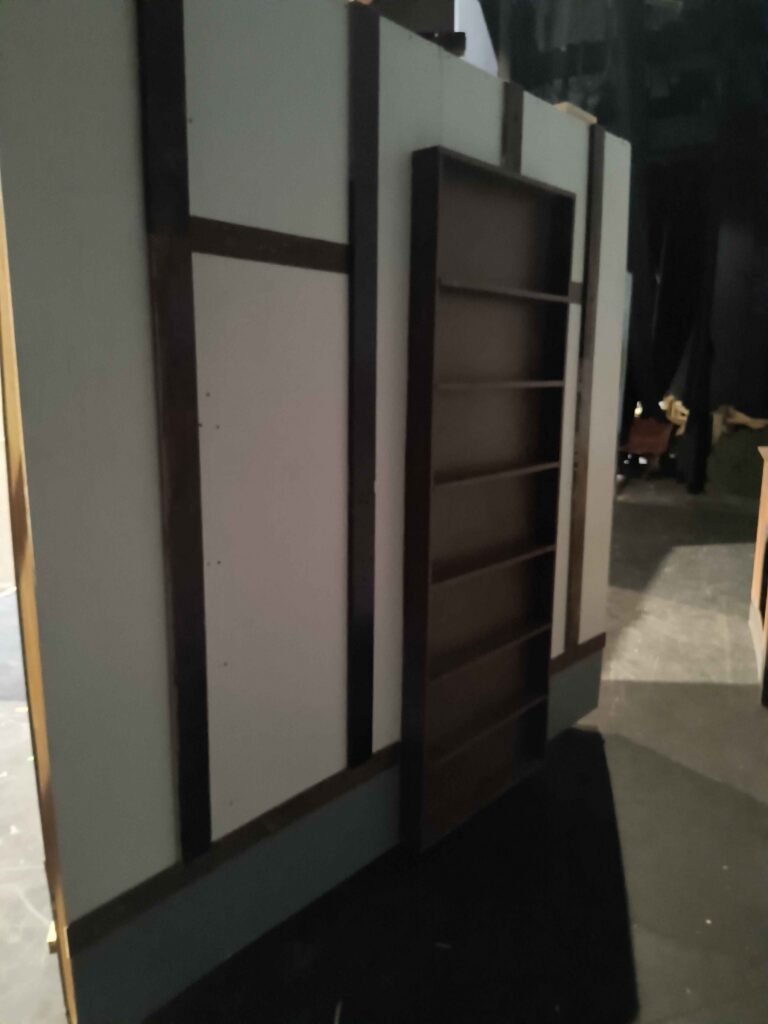
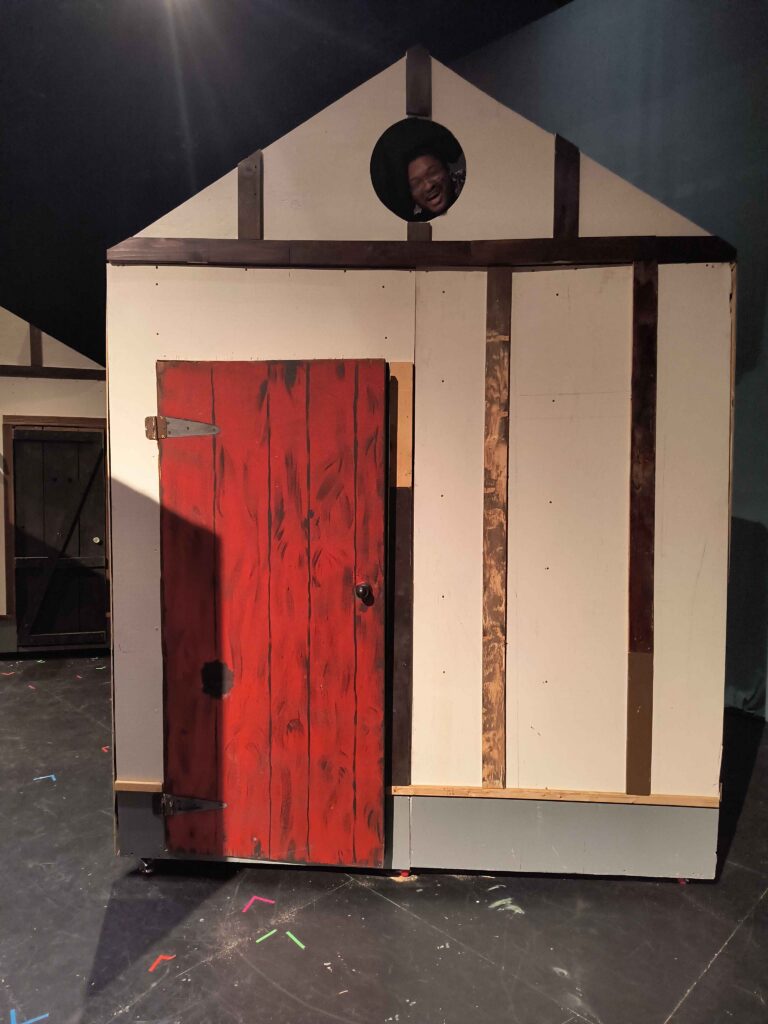
Perhaps most rewarding was the response. Many people were impressed not just by how the set looked, but by how effectively it functioned given the circumstances. This project reinforced an important lesson in design: creativity often thrives under constraints. By combining historical inspiration with practical problem-solving, Casey created something that was both visually compelling and operationally efficient. In the end, it wasn’t just about building a set, it was about designing a system that worked for the people behind the scenes as much as it did for the audience in front of it.
0 Comments